Home » Posts tagged 'teachers'
Tag Archives: teachers
Pray for the Schools?
As we enter the month of May, we see posts and hear comments about the need to pray for our teachers. I agree with this but only if prayer leads to action. What actions?
1 For starters, we might avoid belittling educators on social media. Sometimes saying nothing at all is a prayerful act. Sometimes waiting until we can share a concern with the person needing to know rather than the public is a prayerful act.
2 We might consider making a little donation to our child’s classroom if we’re able. As an adult, I learned that my mother had made donations to my teachers over the years. I imagine my teachers found it encouraging to get a small donation from a lady who was known as an excellent teacher.
3 We might write a note (or an email) of encouragement to our child’s teacher to express thanks for the work and preparation involved in teaching. Emails are nice but a physical note could find its way to a teacher’s desk where they draw encouragement from it repeatedly.
I used to have a file called “special.” In it, I placed notes from parents, students, and peers. When I needed a lift, I’d open that drawer and get a little encouragement by reading a note or looking at a drawing from a student.
4 Students taught me the importance of this next action and I use it often. When we meet a teacher, custodian, secretary, bus driver….try saying, “I’m glad you’re here.” Knowing that your presence is recognized and appreciated is a strong motivator. It took me years to learn this but when a kid came in late and frazzled, I learned to say, “I’m glad you’re here. Have you had breakfast?” I could see them relax and I hoped I helped them have a better day. As a plus, a better day for the kid meant a better day for that classroom and teacher.
And so, say a prayer for the schools, staff, and the kids. Then take some type of positive action. Imagine the impact on our schools if hundreds of us did a few small acts of kindness and encouragement this month.
Letter to Educators in April of 2024
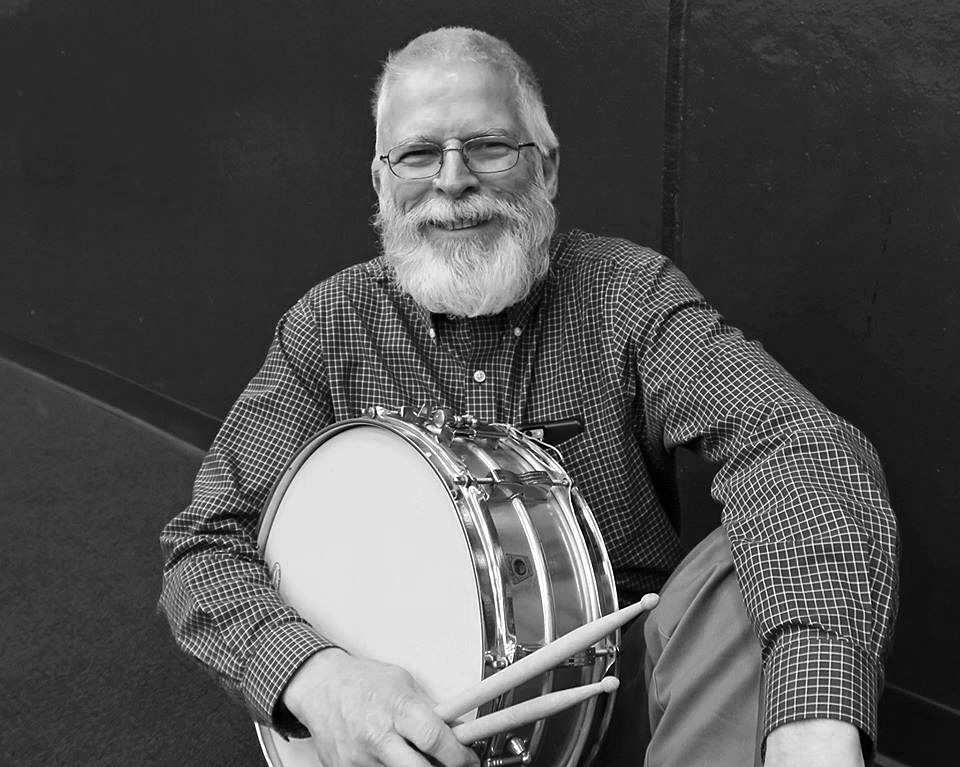
This is a portion of a letter I wrote to the staff where I used to be principal before I retired in 2020.
When I retired, I resolved to give some space between the school and me, not from lack of interest, but to give staff and administrators space to work, especially with the challenges COVID brought. From a distance I watched improvements and good work being done despite challenges.
It was gratifying to know that Alma Intermediate School was in good hands, led by a principal and assistant principal committed to the school, the staff, the students, and to learning. They also demonstrated good character qualities, work-ethic, and solid core beliefs about education.
When I received a message inviting me to mentor a student, I jumped at the chance. It’s been a privilege to come on campus each Monday morning and spend a little time with two students. Recently, we were reading a book together. When I asked if they’d like to check on progress in the garden, one of them said, “Can we keep reading while we walk?” And so, the three of us read our way down the hall and as we went, I listened to the boys and the sounds of learning through the doors of classrooms as we passed by. I’ve visited many schools with AdvancEd, many good and a few not-so-good, but the environment and tone you set with students at AIS is among the best I’ve witnessed.
What teachers do is difficult! The mental work and preparation are understood by very few. Sometimes, people who make decisions that impact the school don’t comprehend the complexities of what you do. The longer I was in education, the more vocal l became about telling political influencers what schools need.
You’re a smart staff and I’d encourage you to use your individual and collective voices to express what is needed. This even extends to state legislators. When they hear from actual teachers, many of them will listen.
Leadership sometimes involves conflict and being the recipient of unwarranted criticism or anger. Leadership can also be rewarding when you see students and teachers learning and growing. Based on what I’ve seen, AIS students and teachers are learning and growing! Are there challenges? You bet. Especially after COVID, and when you’re implementing new curriculum and probably dealing with yet another round of new assessments.
A great educator recently reminded me of “implementation dip.” That’s something we all experience when learning something new. I even experience it when learning something on drums or guitar. It’s uncomfortable, but it’s where learning happens.
Educators now face greater challenges from legislation and community expectations than I’ve ever known. To complicate things, social media provides a platform for everyone to pontificate and spread half-truths or lies within seconds.
On social media posts and in some public meetings, we get rumors and half-truths. Accurate information rarely comes in the form of a rumor or a keyboard click. It requires gathering pieces of accurate information so that decisions affecting students and staff are made carefully.
I’m thankful for those who are willing to work in our schools. They should have our support, adequate funding, and professional respect.

What Kids Need These Days
Several posts floating around on social media propose what kids need these days. They typically lament the fact that society allows a lack of self-discipline and respect, then say we should give kids boundaries, expectations, rules, limits, rewards, and consequences. And, that with these things in place, kids will rise to challenges and exceed our expectations every time.
I generally agree with this but feel the need for clarification because these posts might leave readers thinking of this as a kid problem. I think it’s an adult problem.
Under the topic of “Society,” I would add that kids need many examples of adults doing good work and serving their communities in all fields. Young people need the chance to do tasks appropriate for their age that contribute to their home, school, and community. Also, under “society,” they need to see adults treating others with kindness, especially teachers and community leaders.
I had one burned-out teacher when I was a kid. I didn’t enjoy being in her class, but the experience made me a better educator later on. I never knew of my mother’s negative conversations with that teacher until I was an adult because she didn’t want me to become belligerent and disrespectful toward the teacher. My mother was wise.
Now for “Boundaries.” Boundaries are good, especially if they’re reasonable and appropriate to the child’s age. If boundaries constantly shift because of parents’ emotions, kids are confused. If adults repeatedly violate boundaries appropriate for adults without consequences or apologies, that’s confusing too.
“Expectations” – Yes to expectations, along with the coaching and the gradual building of skills to reach them. I had music teachers, one coach, and one English teacher who were standouts in high expectations. If we underperformed, these teachers felt partly responsible and coached us some more until we got there.
We don’t always exceed expectations. Sometimes we lose the game or play a musical passage incorrectly. Part of striving toward high expectations is learning that we fail sometimes then get up and try again.
“Rules and Limits” Yes, along with rationale for the rules and limits. Rules need to be simple and few in number for kids (or this adult for that matter). Some rules have to be “don’t do this” type rules. The more “do this” rules, the better. Procedures can be more helpful than rules. How do I borrow the car? How do I apologize? How do I speak to others? How do I put something on our family calendar? How do I save my money to buy something? How do I get in touch with my parent during school or work? When do I do my homework, play, and practice?
“Rewards and Consequences” The best rewards cost nothing and are immediate and memorable. Telling a kid that his answer to a question was clear and showed some careful thinking will be remembered. Telling a kid her answer earned an “A” is alright but won’t be remembered.
Consequences should be as natural as possible. Contrived penalties for an infraction build resentment, and the penalties tend to be more dependent on the adult’s mood than the actual violation. My English teacher conferenced with me about something I wrote quickly and without much thought. At the end of the short visit, she told me to rewrite it and that the final grade would be on my final product. That was a reasonable and natural consequence, and it was a consequence that taught me to do better. Just giving me a “C” or “D” would have been easier but meaningless.
As I’m writing this, I feel convicted for my deficiencies in parenting. It’s a wonder our kids turn out as good as they do! When our first daughter was born, my mother gave me a small frame with eight silver dollars to remind me of a mistake she made in teaching me about money when I was a kid. The caption read, “No one said parents are perfect.” My mother was wise.


Grace for Teachers and Students
Time to share a sermon. My qualifications to preach? I’m a former music teacher and school principal, and worked with thousands of great students, teachers, and families. I’m now at the pinnacle of my career in my roles as Gramps and Ozarks Vagabond.

When I was going through school, I developed some gaps in my learning. As I continued, some of these gaps got filled in, and some didn’t. I used to beat myself up and try to hide my learning gaps. That wasn’t helpful. I’ve come to realize that most of us have gaps, areas of strength, and areas of weakness. It’s kind of like being a human, and it’s OK. Sometimes we compensate for areas of weakness and get along just fine. Sometimes our weakness helps us understand others or seek help from others as we go along.
When teachers do their best under challenging circumstances, they deserve some grace. Teaching faster won’t result in faster learning. It doesn’t work that way. Gaps will be filled in gradually over time if teachers and kids continue to be engaged in good work.
A few things we can do….
Express gratitude to a teacher.
Give kids a pat on the back and words of encouragement.
Smile at kids (even teenagers) and tell them you’re thankful that they’re here.
Read to and/or with a kid.
Tell kids when you learn something new. Be sure you’re learning new stuff.
Tell kids they don’t have to be perfect. Emotional intelligence is more important than academic skills.
Thank you, teachers, for the immeasurable impact you have on our community. We’re thankful you’re here!
 Principal Notes