Home » Posts tagged 'alma intermediate school' (Page 2)
Tag Archives: alma intermediate school
Newsletter for October, 2015
Click this link to view the whole newsletter: Newsletter for October, 2015
From the Principal…
This year, we’re preparing students to take a new assessment, ACT-Aspire. PARCC was administered last year, but it was determined that giving the ACT-Aspire would be more beneficial for students as we prepare them for college and careers.
One of the challenges of preparing for a difficult test is to increase students’ stamina, or their ability to stick with a difficult task to its completion. Stamina is especially hard if the task isn’t fun.
I experienced this first-hand several years ago while taking a national teaching exam. At one point during the three-hour test, my mind began to wander. I realized this and refocused my attention on the test. I passed, but the best lesson I learned was the importance of staying focused to the end of the test.
Our teachers go to great lengths to present lessons that engage students so we can increase learning and make it stick. It’s a thrill to see students involved in discussion or a hands-on task and excited about learning; lessons that are fun!
There are also times that teachers must work to increase academic stamina and endurance. If students are enthusiastic about demonstrating their learning, we have a much better chance of increasing their stamina and showing what they actually know on tests.
Our goal is to prepare our students to perform well on any challenge they confront in life, including high-stakes tests. Thank you for supporting your child and for giving us the honor of working with your child.
Promises of Technology
Here’s a link to the whole newsletter that includes a calendar for September and October, pictures, and information about our students’ use of technology.
Alma Intermediate School Newsletter for September, 2015
From the Principal…
Some of the wild predictions made about the future when I was younger have not come true. There was a lot of concern about how we would spend all of the free time caused by technology and modern conveniences. They really missed the boat on that one. There were also predictions about transportation and health that have proved to be greater challenges than estimated.
However, when I look back just 20 years, it’s amazing to see the pace of change. Music that I used to play on vinyl records or cassette tapes is now stored on my iPod, which holds my whole collection of music, podcasts, and audiobooks. I carry a phone that is a small computer. With it I can send and receive emails, access the Internet, read books, text directly to anyone in my contacts and….make phone calls. One of my favorite devices is my e-reader that holds many books and allows me to carry a library of resources in my backpack.
The students in our school have never known a time when this technology that astounds me didn’t exist. What does the future of technology hold for us and our students? Will we lose our balance and fail to maintain strong relationships with others in our community as we rely more and more on technology? Will we settle for a constant drivel of disconnected information or strive for deep understanding with a cautious approach to the sources of our information?
Our hope is that we will help students use technology as a tool to increase and enrich our communication with others and solve complex problems now and in the future. On the back page of this newsletter is a portion of an article sharing just a couple of ways we involve students with technology at AIS.
Alma Intermediate School Newsletter for June, 2015
Click the following link to open our newsletter for June.
Alma Intermediate School Newsletter for June, 2015
From the Principal….
Ms. Break was my fourth-grade teacher. I heard her from the hallway during my third-grade year and looked forward to her famous reading performances. Fourth grade became an important year in my schooling.
I had a habit of drumming on my school desk. I liked to explore the sounds that could be made by hitting different parts of the desk. I occasionally put my head on the desk so I could hear the rhythms better. Ms. Break would tap me and say, “Stop that drumming!”
Years later, I was playing timpani (kettle drums) for a church in my hometown. During rehearsal, I heard a lady yell down from the choir, “You never did stop that drumming!” We had a laugh, and I enjoyed a short visit with an elderly Ms. Break, thanking her for the influence she had on my learning.

When I look back at the teachers who had the greatest impact, it boiled down to relationships. The positive relationships between the teacher and students often determined the quality of learning. The greatest teachers built a sense of community around shared tasks, and the subject being taught.
Ms. Break had a positive influence on my learning. I was a slow and reluctant reader, but she instilled a love of reading that sustained me through school and helped me become a stronger student.
I’m proud that we have a school filled with “Ms. Breaks” who are excited about teaching and who build positive relationships with their students. I’m excited about the coming year and the great things in store for our students. Have a great 2015-16 school year!
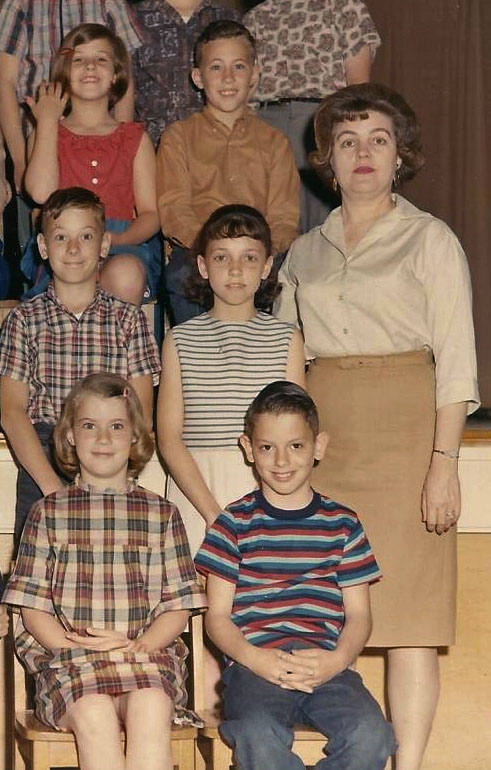
Ms. Break, fourth grade teacher
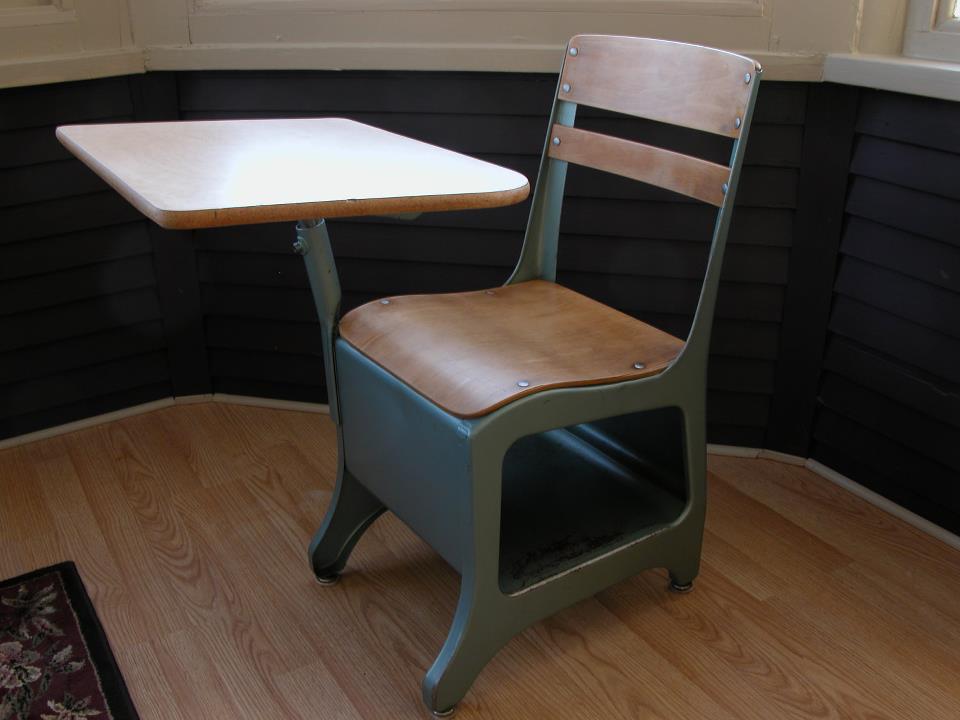
One of my first drums.
Alma Intermediate School News – April, 2015
Alma Intermediate School News April, 2015
A lot of good things are happening at Alma Intermediate School! I’m thankful for our staff, students, and parents!
I spent some time this month thinking about my personal mission and vision, asking myself if I’m staying true to what I believe about teaching and learning. The link above should give you access to our newsletter.
From the Principal:
What we believe about teaching and learning plays a big part in students’ results. When I interview candidates for teaching positions, their core beliefs and work ethic are essential. If the beliefs are solid, the teaching skills needed will rise to meet those beliefs. The same applies to me as a principal. Every year I look at what I believe as a teacher and a principal. My hope is that the following words will act as a filter for every decision and action as I work with others in our school.
Professional Mission Statement:
- I believe that educators have the power to change the direction of young lives and have a positive effect on the lives of future generations. Learning is a joyous and never ending process that leads to successful living and has a positive impact on our families and communities. I must set the example as a lifelong learner if I expect students and teachers to be continuous learners.
- Teaching and learning require planning, enthusiasm, desire, time and effort. I have great respect and appreciation for teachers and their work.
- As a school principal, I am ultimately responsible for the learning and safety of our students. Only by working with every part of the community can I meet this responsibility. Working together we can provide the best possible education for all of our children.
Vision
- AIS will demonstrate high levels of student engagement in learning every day. Learning will be demonstrated in meaningful and public ways.
- AIS will be a community of learners actively sharing and collaborating to increase student learning so that best strategies spread.
- AIS will be a joyful place where student needs are the focus. The emotional, academic, physical and spiritual needs of students and adults will be met through continuous learning. Accomplishments, both personal and professional, will be recognized and celebrated.
- Students will make great gains academically. Advancing in academic achievement will be the norm.
- The arts and creativity will be displayed publicly and recognized as academic accomplishments.
School News for December, 2014
Alma Intermediate School Newsletter – December, 2014 Click the link to open the full newsletter.

Aunt Nance is on the right, pictured here with siblings Arch Warnock, my grandfather, and Aunt Hettie.
From the Principal…
As a teaching intern in my last year of college, I was able to visit my great-aunt who lived close to the school. Aunt Nance made me feel special and was interested in what I was doing. That made me want to visit her often, even though we were from different generations.
Aunt Nance had a well in her yard, a big vegetable garden, and loved to share her biscuits and homemade jelly. Going to her house was like stepping back into a simpler time. I don’t remember her having a television. Conversation was our entertainment.
I loved our visits but dreaded seeing her pull shoe boxes out of her closet because that meant we were going to look at old family photos. Many of the pictures were of people I’d never met, but I would try to pay attention and be polite.
I was recently telling someone about Aunt Nance and realized that I would give anything to sit down with her and go through some of those shoeboxes filled with pictures today. I would ask her to tell stories about the family members in the pictures. I would ask her if we could label the pictures and make copies for me to keep.
My hope at this Christmas season is that we will treasure our time together and make some good memories. Ask the elders of your family about Christmas when they were children. You just might learn some good stories about your family. Let’s give our cell phones a rest and have a conversation with parents or grandparents. Time and attention might be the most valuable gifts we can share.
Alma Intermediate School Newsletter for May, 2014
Alma Intermediate School Newsletter for May, 2014
Click to open newsletter or paste the address below into search window.
Click to access News_Alma_Intermediate_0514.pdf
A Practical Tool for Looking at Grade Retention
“I want Johnny retained, and that’s that!” Many of us in education have probably heard something similar from parents or a teacher. Unfortunately, we sometimes jump into retention as the answer when a more targeted and studied response would offer better results.
At Alma Intermediate School, we use the Light’s Retention Scale (LRS) as a tool to gather evidence for decisions about placement that might change the path of a child’s future. By completing the LRS, student age, learning difficulties, behavior, family characteristics, attendance, motivation, and other factors are part of the decision about retention. I should give full disclosure here, and say that I think retention is an ineffective practice because of the lack of supporting research. John Hattie’s work places it in the “reverse effects” range on effect size. “This is one of the few areas in education where it is difficult to find any studies with a positive effect, and the few that do exist still hover close to a zero effect.” (Hattie, p 97)
Here’s just one short example in which we used the Light’s Retention Scale to gain evidence to aid in the decision making process.
A nine year old student (we’ll call her Julie) moved into our school district two summers ago. The parents were unsure about Julie’s placement. They produced a letter from her previous school stating Julie was being retained in 2nd grade because she had “not mastered the skills necessary to move on to the next grade level.” The letter went on to say, “Once a child has moved on to the next grade level, he or she never again has the chance to ‘go back’ and learn the skills of the previous grade.”
In my experience, grade-level skills are not so specific, clearly defined, or easy to measure. Children do not always fit neatly into specific grade levels. Even as an adult, I’m continually “going back” and relearning things. Sometimes I learn things I missed or that became relevant to me later in life. The same thing happens with children.
Our first step was to work with the parents to fill out a LRS which takes about twenty minutes to complete. After conferencing together with the parents and looking at the interpretation of scoring, we made the joint decision that Julie should be promoted to the third grade.
As a third grader, we saw Julie engaged in learning and enjoying strong relationships with teachers and her peers. Teachers learned from their assessments that reading fluency was Julie’s main area of weakness. Julie responded to focused fluency instruction and scored Proficient in both Literacy and Math. She is now having a great fourth grade year.
I recently asked Julie how she thought things might have been different if she had repeated 2nd grade. She said, “I think I would have been stuck in a rut that I couldn’t get out of. Like I was stuck in 2nd grade but not knowing how to get to 3rd grade.” What I saw before me as we visited was a child now hopeful about the future and excited about learning.
The Light’s Retention Scale does not make students successful. Only good teaching can do that, but it does provide important evidence related to student placement when the possibility of retention is being considered. It can also be used by educators as a defense against knee-jerk efforts to retain students who are experiencing learning challenges. These challenges require the hard work of intense and prescriptive teaching rather than the simple repetition of the previous year’s instruction. Committed and innovative teachers, equipped with relevant evidence, can move students through learning difficulties along multiple paths toward success.
John Hattie, Visible Learning, Routledge publisher, 2009
Light’s Retention Scale, Academic Therapy Publication, 2006
Written for the Arkansas Association of Educational Administrators December Instructional Leader.
 Principal Notes