Home » Articles posted by ozarkmountainhiker (Page 2)
Author Archives: ozarkmountainhiker
Reflecting after the Uvalde, TX school shooting
A couple of thoughts about school safety since I spent a few years in schools…
I’ve watched students and teachers take many actions to improve school safety. I’ve seen teachers in tears during and following emergency drills or training while trying to determine how to best prepare for possible intruder scenarios. I’ve watched the Alma School District make safety a priority with the addition of SROs, surveillance cameras, a secure front entrance that unlocks after approval, and more. Most importantly, school safety remained at the forefront of thinking even when it wasn’t in the news.
Some politicians are now suddenly passionate about hardening our schools. Some might be sincere but I suspect it’s a diversion. IF they were serious, they’d investigate the actual costs of even a few of the things they’re suggesting. 1 Hiring multiple armed guards for the entrance of every school in our nation? 2 Passing every human through metal detectors before being approved to enter? 3 Razor wire fences around all schools in the nation? 4 Bulletproof glass on all exterior windows? There are other proposals flying around that’s mostly smoke and mirrors.
Politicians throw out these ideas and ask indignantly why all their suggestions aren’t being adopted, but it’s a delay tactic in hopes that “this too shall pass.” They want us to lose interest and history says that, given time, we will.
What are some of us interested in? How about making it just a little bit inconvenient for kids to purchase certain weapons and large volumes of ammo until they reach an appropriate age and pass some competency barriers sorta like I did to get the privilege of driving.
Since this is a complex problem, maybe we should approach it from a variety of angles. Yes, improve safety procedures and facilities, but reasonable requirements for gun ownership and use should be something we’re willing to do.
“But criminals don’t follow the rules.” That’s true, but it doesn’t stop us from requiring a driver’s license, registration, and liability insurance. And, the existence of rules makes it more obvious when someone is acting outside of the behaviors expected by society.
Another good banned book…

MAUS: A Survivor’s Tale, by Art Spiegelman, is a banned book so it made my reading list. Spiegelman interviews his father and shares the father’s memories from the Holocaust. As I recall, the objections to this book included a nude mouse, three curse words, and the account of his mother’s suicide.
1. His mother committed suicide, probably a result of the trauma she experienced. Seemed essential to the story.
2. Imagine an actual curse word cropping up in the telling of the Holocaust story. Totally appropriate and nothing I hadn’t heard as a kid.
3. I never found that nude mouse.
I tried to read this with an eighth grade mindset (not difficult for those who know me). Lots of valuable learning in this book! Glad I read it.

Letter to Virginia’s Ed. Watch Hotline
I wanted to practice satire and the Virginia Department of Education provided a writing prompt….
To: State of Virginia
I suspect that some schools in Virginia are still making The Adventures of Huckleberry Finn available to students in school libraries. This book was banned soon after publication in 1885, and I think continued scrutiny is justified.
I fear that the depiction of racism in this book might make some children uncomfortable. I remember being disturbed when my fourth-grade teacher, Ms. Break, read this book to us in class. The book uses racial slurs and depicts cruel actions of white slave owners. It also shows Jim, Huck’s partner in crime, as a man of good character even though he is an escaped slave. Our children should not have to deal with conflicting ideas of this nature.
Since, as an adult, I still remember my teacher reading this book to our class, you can see that I experienced an emotional response to the text, and it still disturbs me today. An added concern is that Mark Twain is known to express opinions not in keeping with traditional societal ideals and norms.
I think The Adventures of Huckleberry Finn should be investigated to see if it’s appropriate for our fragile young learners.
Sincerely,
Note:
I participated in two library materials challenges during my twenty-plus years as a school principal. Both involved the use of sub-standard English in the dialogue. Our schools had a written process in place for challenging books or materials. A committee of educators and parents reviewed the books in question and made recommendations. Since the dialogue in these books was consistent with the characters speaking, both were recommended for the library. Parent input was significant in making these decisions.
We found books that might not be age-appropriate on several occasions and referred them to our middle school or high school. Educators exercised professional judgment in purchasing books for the library and classrooms with limited funds. Educators included books that challenged readers to think as appropriate for the ages and development of the students.
The state of Virginia seems poised to override the local control of educational materials for their children by instituting a hotline system for reporting any books or materials of concern. The Virginia Dept. of Ed. has a website and phone number just like the Arkansas Dept. of Ed., but the news release accompanying their new hotline indicated its purpose. A complaint goes to the state level without involving the local school and board members.
Virginia’s hotline motivated me to write the short satirical letter above. I probably shouldn’t send it since they’re likely take me seriously.
Jim Warnock, Retired Educator

What Kids Need These Days
Several posts floating around on social media propose what kids need these days. They typically lament the fact that society allows a lack of self-discipline and respect, then say we should give kids boundaries, expectations, rules, limits, rewards, and consequences. And, that with these things in place, kids will rise to challenges and exceed our expectations every time.
I generally agree with this but feel the need for clarification because these posts might leave readers thinking of this as a kid problem. I think it’s an adult problem.
Under the topic of “Society,” I would add that kids need many examples of adults doing good work and serving their communities in all fields. Young people need the chance to do tasks appropriate for their age that contribute to their home, school, and community. Also, under “society,” they need to see adults treating others with kindness, especially teachers and community leaders.
I had one burned-out teacher when I was a kid. I didn’t enjoy being in her class, but the experience made me a better educator later on. I never knew of my mother’s negative conversations with that teacher until I was an adult because she didn’t want me to become belligerent and disrespectful toward the teacher. My mother was wise.
Now for “Boundaries.” Boundaries are good, especially if they’re reasonable and appropriate to the child’s age. If boundaries constantly shift because of parents’ emotions, kids are confused. If adults repeatedly violate boundaries appropriate for adults without consequences or apologies, that’s confusing too.
“Expectations” – Yes to expectations, along with the coaching and the gradual building of skills to reach them. I had music teachers, one coach, and one English teacher who were standouts in high expectations. If we underperformed, these teachers felt partly responsible and coached us some more until we got there.
We don’t always exceed expectations. Sometimes we lose the game or play a musical passage incorrectly. Part of striving toward high expectations is learning that we fail sometimes then get up and try again.
“Rules and Limits” Yes, along with rationale for the rules and limits. Rules need to be simple and few in number for kids (or this adult for that matter). Some rules have to be “don’t do this” type rules. The more “do this” rules, the better. Procedures can be more helpful than rules. How do I borrow the car? How do I apologize? How do I speak to others? How do I put something on our family calendar? How do I save my money to buy something? How do I get in touch with my parent during school or work? When do I do my homework, play, and practice?
“Rewards and Consequences” The best rewards cost nothing and are immediate and memorable. Telling a kid that his answer to a question was clear and showed some careful thinking will be remembered. Telling a kid her answer earned an “A” is alright but won’t be remembered.
Consequences should be as natural as possible. Contrived penalties for an infraction build resentment, and the penalties tend to be more dependent on the adult’s mood than the actual violation. My English teacher conferenced with me about something I wrote quickly and without much thought. At the end of the short visit, she told me to rewrite it and that the final grade would be on my final product. That was a reasonable and natural consequence, and it was a consequence that taught me to do better. Just giving me a “C” or “D” would have been easier but meaningless.
As I’m writing this, I feel convicted for my deficiencies in parenting. It’s a wonder our kids turn out as good as they do! When our first daughter was born, my mother gave me a small frame with eight silver dollars to remind me of a mistake she made in teaching me about money when I was a kid. The caption read, “No one said parents are perfect.” My mother was wise.

Advice for Politicians Speaking to Teachers
Time for a quick sermon. As I’ve stated before, my qualifications to preach include being a former teacher and school principal who worked with thousands of great students, teachers, and families. I’m now at the pinnacle of my career in my Gramps hat as the walker of trails.
Recently, a politician spoke at a public school staff’s opening assembly for second semester. Nothing against politicians, but if we’re looking for someone to inspire educators as they begin a new year, we could probably do better. And, in today’s politically charged division, someone not associated with any particular political party might be a better choice when addressing a diverse group of educators.
Teachers face the continued challenges of a pandemic, staff shortages, increased social-emotional health needs of students, and criticism from the public and politicians for sometimes sharing an honest rendering of our nation’s history.
A politician preaching on the dangers of our national deficit while defending his voting record and asking that teachers help students reach their full potential is not inspiring or relevant to the challenges educators face.
If Mr. Politician had a clue about education, he’d know the teachers he was addressing were committed to helping their students reach their full potential, or they would have already left. Mr. Politician might also realize that using the national deficit to justify voting against infrastructure after voting in favor of tax breaks for the wealthy exudes the aroma of BS for educators skilled in the art of detecting BS.
Mr. Politician might be better off sharing his educational journey and a teacher who inspired him if he had one. Then, asking teachers to talk to him while he listens might be a good way to wrap up the program. Just my opinion.

Grace for Teachers and Students
Time to share a sermon. My qualifications to preach? I’m a former music teacher and school principal, and worked with thousands of great students, teachers, and families. I’m now at the pinnacle of my career in my roles as Gramps and Ozarks Vagabond.

When I was going through school, I developed some gaps in my learning. As I continued, some of these gaps got filled in, and some didn’t. I used to beat myself up and try to hide my learning gaps. That wasn’t helpful. I’ve come to realize that most of us have gaps, areas of strength, and areas of weakness. It’s kind of like being a human, and it’s OK. Sometimes we compensate for areas of weakness and get along just fine. Sometimes our weakness helps us understand others or seek help from others as we go along.
When teachers do their best under challenging circumstances, they deserve some grace. Teaching faster won’t result in faster learning. It doesn’t work that way. Gaps will be filled in gradually over time if teachers and kids continue to be engaged in good work.
A few things we can do….
Express gratitude to a teacher.
Give kids a pat on the back and words of encouragement.
Smile at kids (even teenagers) and tell them you’re thankful that they’re here.
Read to and/or with a kid.
Tell kids when you learn something new. Be sure you’re learning new stuff.
Tell kids they don’t have to be perfect. Emotional intelligence is more important than academic skills.
Thank you, teachers, for the immeasurable impact you have on our community. We’re thankful you’re here!

Remembered Kindness on the Playground

At the risk of embarrassing a friend, I want to share something I wrote recently. Rusty is a friend to many and has had immeasurable positive influence during his life, but I didn’t know him at the beginning of this story.
During the third grade, I had Rheumatic Fever and missed the last half of the school year. My parents made sure I had a tutor, but we decided it would be best for me to repeat third grade. All my friends moved on to fourth grade. At the beginning of the next school year, I felt lost walking alone on the playground and dribbling a red kickball. Rusty and a friend of his, Mark, came up and asked if I’d like to play basketball with them. They were my first new friends that year.
A few years ago, I mentioned this incident to Rusty and could tell he didn’t remember it. I thought it must have been because he did kind things so often. How could he possibly recall them all?
I’m sharing this simple story and poem in hopes that students will follow Rusty’s example. Who knows? Maybe some of their acts of kindness and friendship will be remembered for years to come.
Remembered Kindness
Being a friend when a friend was most needed
was so natural a part of who he was.
Years later, he had no memory of that crucial
day when kindness was shown to a schoolmate on
a dusty playground.
He had no idea of the weight his friendship might carry.
He had no thought of self-serving motives, or earning merit with his creator.
He could not see at that time how a kind act would result in lifelong admiration.
I guess that’s how it is for people who are truly kind to the core.
There is so much goodness that it often comes out unrecognized and without fanfare.
It’s just the essence of who they are.

A Note from the United States Flag
Criticism of those who protest the flag even as others use the flag as a weapon led me to wonder what the flag might say if it had a voice, so here’s a note from the United States Flag.


High School Do-Over

Someone asked if I’d like to do high school over again. After some thought, I decided I would do it again if I could know what I know now. Here are a few things I would do differently…
I would thank my parents for coming to performances and events.
I would thank my teachers from time to time. I’d thank guest conductors for their work after region band and choir events.
I’d say some of the stuff I was afraid to say to my peers the first time through.
I’d spend more time visiting with those of different races or backgrounds.
I’d say, “I disagree with that” when someone said something I disagreed with.
I’d smile and speak to peers who didn’t seem to have friends.
I’d worry less about what different social groups thought about me, realizing they were probably not thinking of me at all.
I’d ask my teachers more questions, especially about their lives.
I would read more, especially books not required.

Sometimes learning is uncomfortable
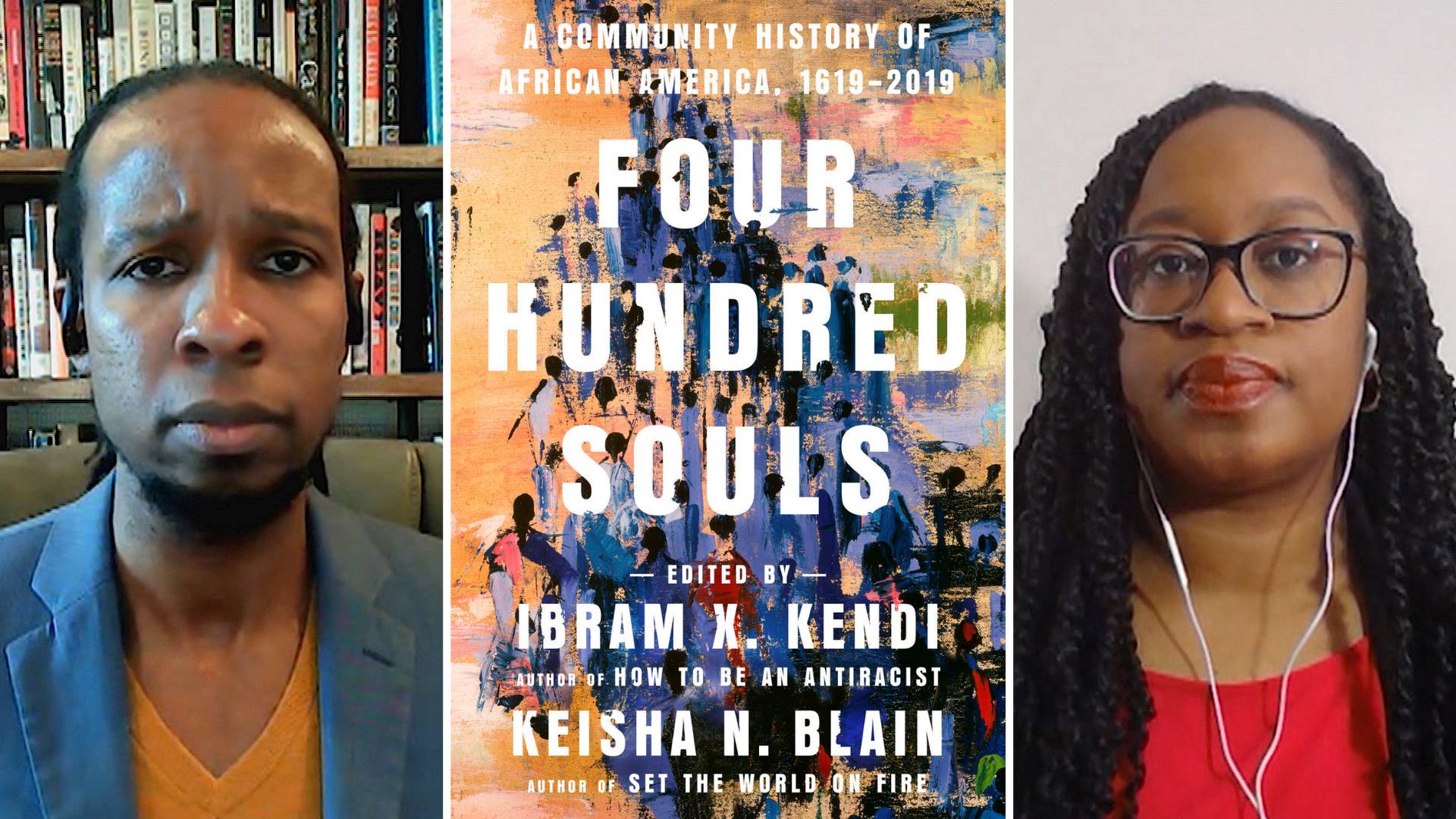
Some of our lawmakers want to be sure educators (and other state entities) don’t teach any “divisive” concepts while teaching about race relations, slavery, social injustice, and stuff like that. Sounds to me like these lawmakers want some serious revision history to be taught, or they’re trying to “fix” instruction that might not meet their approval.
I experienced typical history teaching in school and am now trying to fill in some gaps to better understand how slavery and racial injustice shaped our nation. My observations during life confirm that these issues have shaped our country with tragic results. Guess some lawmakers want to be sure we fail to honestly face racial division and current and past injustices.
Below is my reading list related to this topic from the last year. Remember, I’m just playing catchup. Please beware; some might perceive some of this stuff as divisive. Some of it even hurts my feelings or makes me uncomfortable when I read it. Sometimes discomfort means we’re learning something new.
Four Hundred Souls: A Community History of African America 1619-2019, edited by Ibram X. Kendi and Keisha N. Blain (currently reading)
The Ku Klux Klan in 1920s Arkansas by Kenneth Barnes (currently reading)
How to Be an Antiracist by Ibram X. Kendi
Across That Bridge: A Vision for Change and the Future of America by John Lewis
The Fire Next Time by James Baldwin
The Souls of Black Folk by W.E.B Du Bois
The Sword and the Shield: The Revolutionary Lives of Malcolm X and Martin Luther King Jr. by Peniel E. Joseph
Frederick Douglass: Prophet of Freedom by David W. Blight
Narrative of the Life of Frederick Douglass by Douglass
Stride Toward Freedom: The Montgomery Story by Martin Luther King Jr.
 Principal Notes